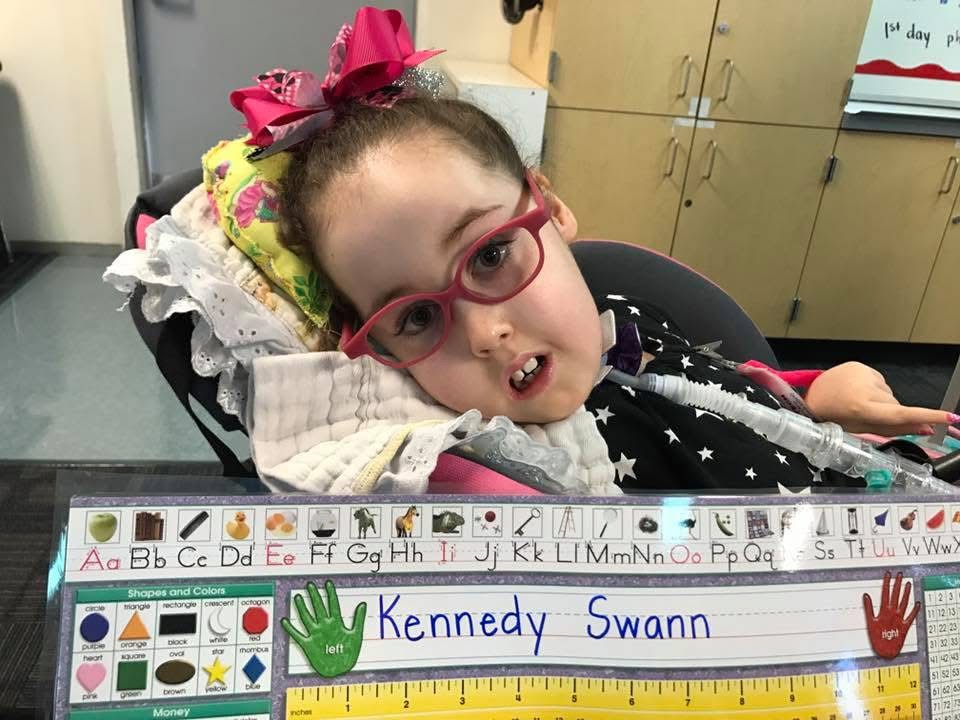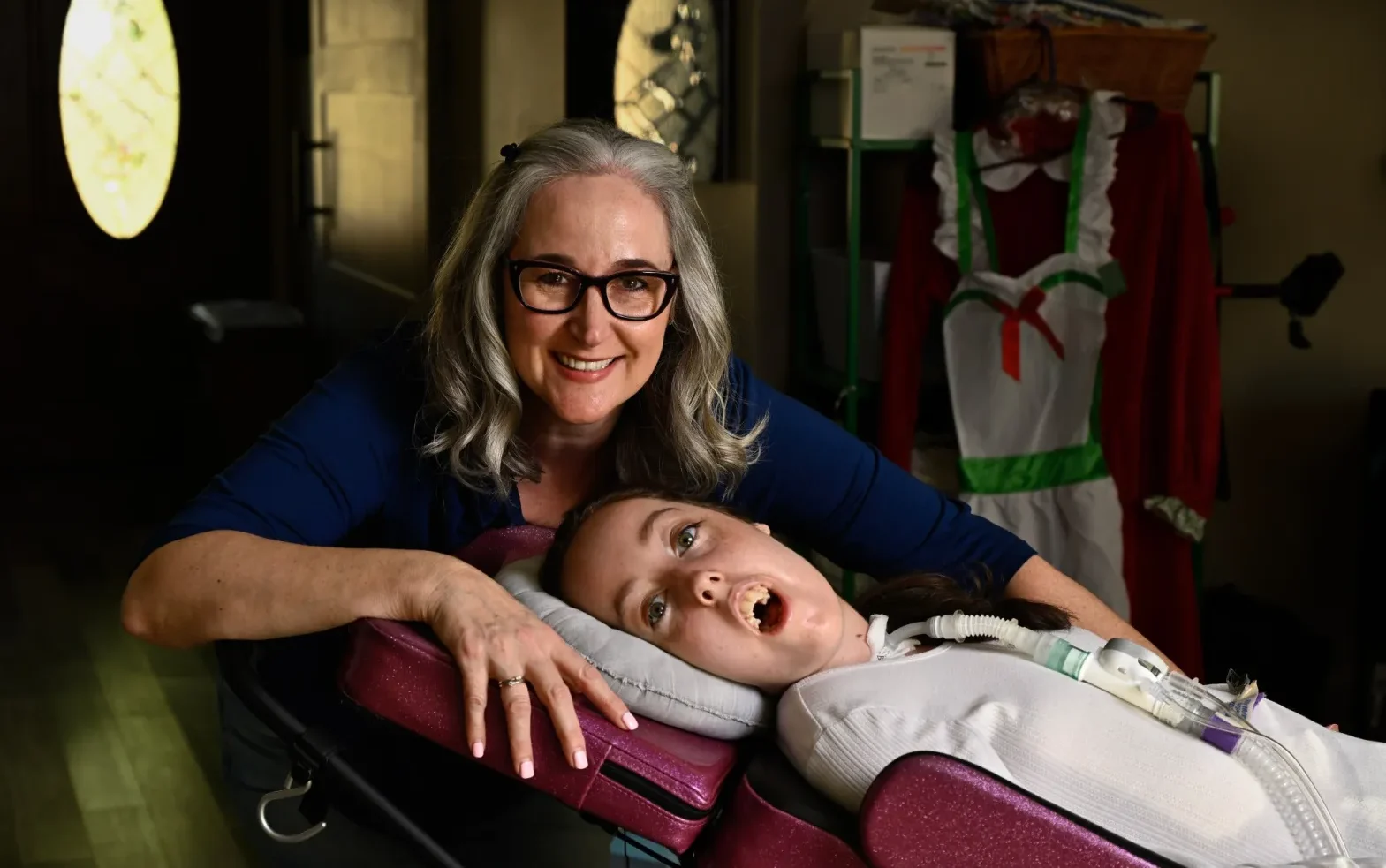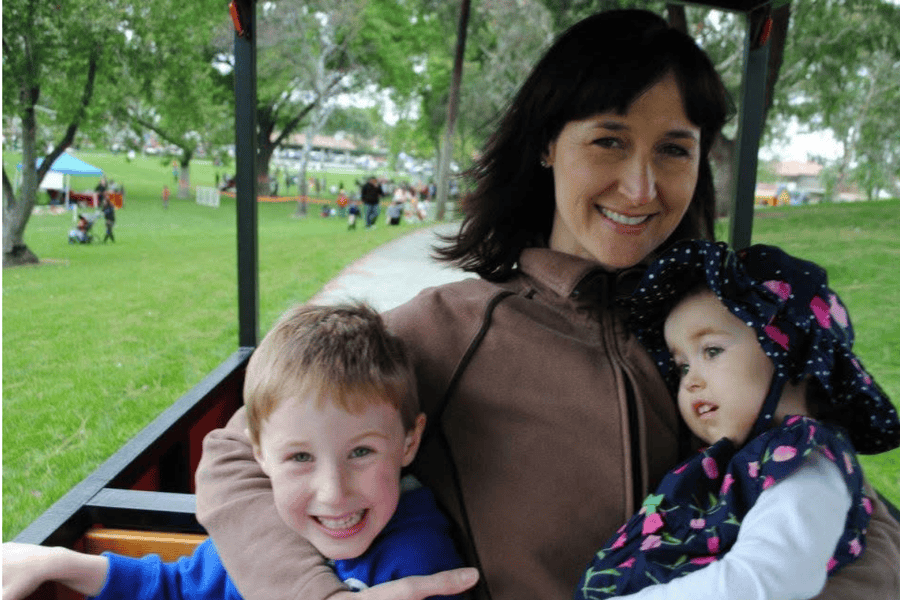
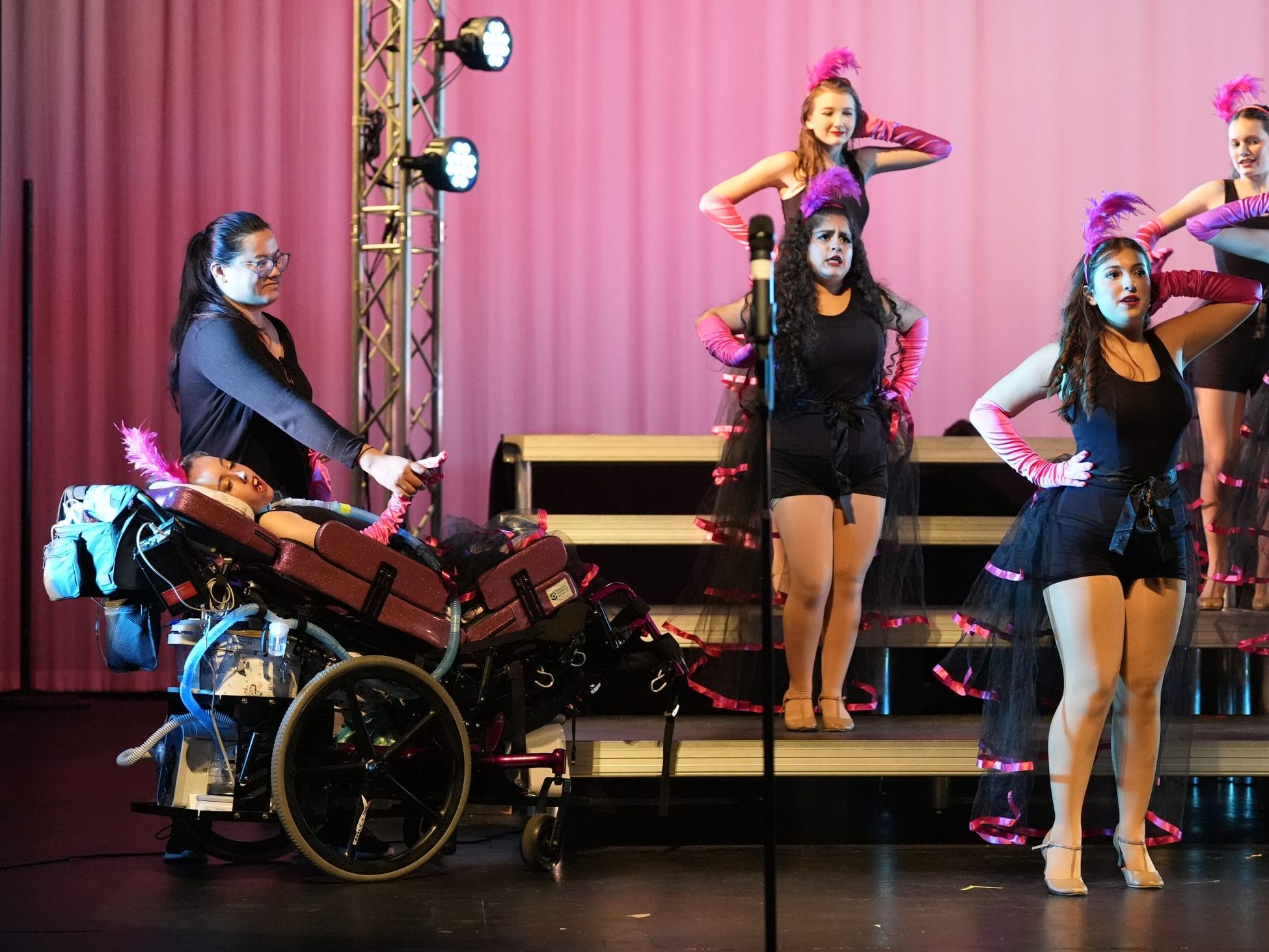
My daughter was just about as medically fragile as they come when she first expressed that she wanted to go to preschool in person. She was 4 years old and she could not cough, swallow, or move, and she required breathing support when she got tired. The idea of exposing her to a bunch of preschoolers who probably wouldn’t cover their coughs and sneezes terrified me.
And yet, she had made her desire perfectly clear. And I had made a promise to myself that I would let her live her life.
We took a lot of precautions in the beginning. If there was a cold going around, I kept her home. She didn’t go to school at all during cold and flu season. And I made sure her nurse knew to have the kids sanitize their hands if they wanted to be near her.
Still, there’s a surrender that must happen when you leave your child at school without you, and for a mama to a medically fragile child, it requires a whole other level of trust.
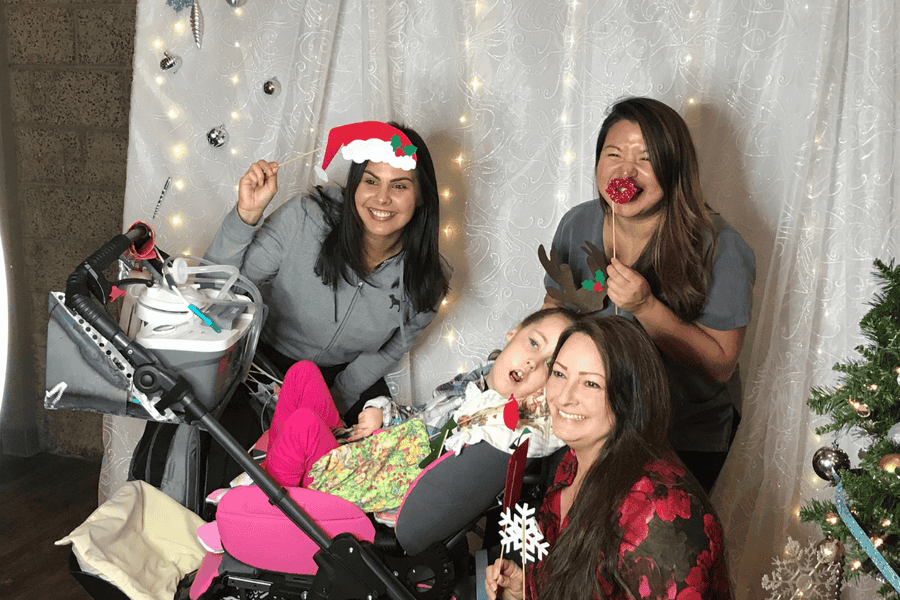
I remember her first day of kindergarten like it was yesterday. While that is an emotional day for all parents, we didn’t know if she would make it to kindergarten. We didn’t know if she would make it to two years old. So leaving her at school that day left me with all the feels. I was a hot mess. But she was happy as a clam. She had her own little groupies who signed up to be on “Kennedy’s Crew” opening doors and helping her navigate to recess and such.
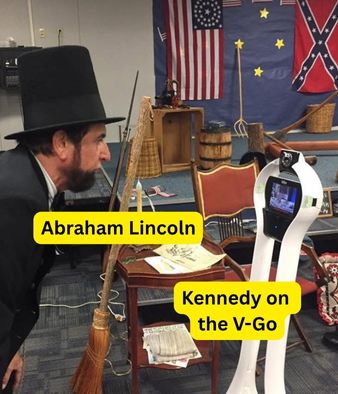
As she progressed in school, we got creative – finding ways for her to be included and “present” even when she wasn’t actually present. By 2nd grade she had a V-Go – a two-way camera/robot operated by an adult at the home that navigates the classroom and travels with the class across campus. It has a function to “raise its hand” so she could answer questions posed by the teacher. She could see the other kids and her little face was in the video they saw in the classroom.
But as she got older, she didn’t want to stay home over winter. So, we let her stay in year-round unless a nasty bug popped up, then we pulled her for a couple weeks. By the time she was in 7th grade, she was her own advocate when it came to being pulled from school. During a particularly nasty outbreak of RSV that was sending kids with no underlying health conditions into the hospital, she argued with her pulmonologist about being pulled out of school.
Kennedy’s speech is difficult to understand if you aren’t around her a lot, so with a not-so-straight face, I translated for the doctor why she was refusing to stay home during this RSV outbreak: there was a cute boy in her 6th period art class and she needed to be able to stare at him every day. He said, “really?’ I said, “Yes.” Kennedy and her pulmonologist proceeded to negotiate the terms of her staying in school: she and her nurse would wear masks during this outbreak, and in any class over 15 kids, she would be required to be seated in an area with good ventilation (but still with a view of said cute boy in 6th period).
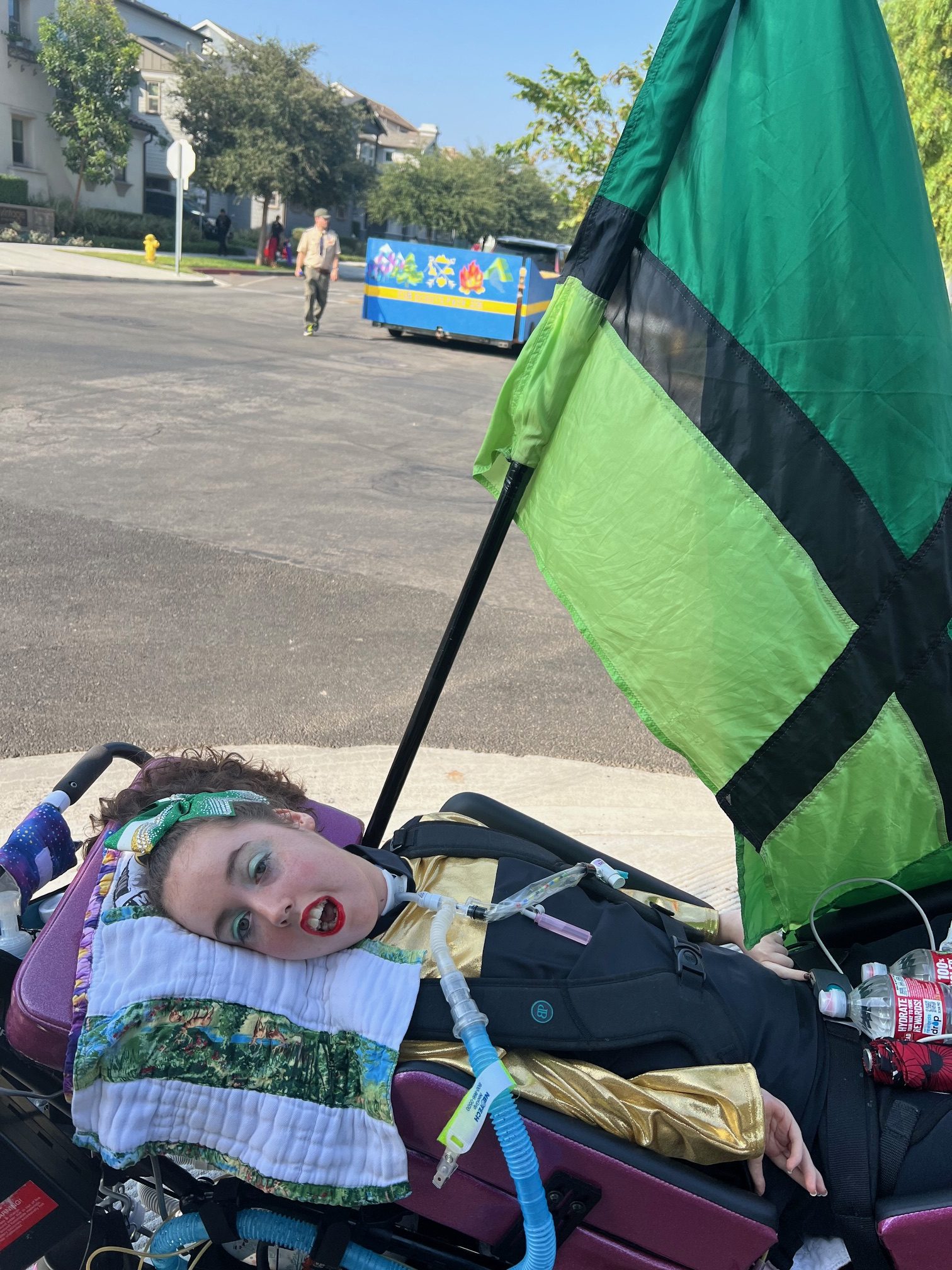
By high school, Kennedy was thrilled to choose her own electives: show choir and color guard. Okay, mom, time for some conversations about inclusion and accommodations!
With each teacher, we settled on “how” Kennedy would participate, and what the expectations would be – the competition and performance schedule was way more than her little body could handle – so we culled down to reasonable numbers how often she was expected to show up at after school commitments. And of course, her health always came first. For color guard, we narrowed her participation down to parades only, with her being the “lead” flag bearer at the front of the Color Guard. We didn’t need a rifle or flag dropped on her head as might happen at the traditional shows. It all went beautifully.
We are grateful to have an IEP that supports Kennedy in so many ways. She attends school with a nurse and a one-on-one aide. She has access to her eyegaze device all day as that’s how she communicates with other students. She chooses her own electives. When her home health nurse is out sick, her trained back-up nurse, who works for the school district, covers her during school hours. If she does not have the stamina to attend school in-person, everything is in place for her to hold school at home, with aide services provided in person at home and speech services provided remotely.
I don’t know that I ever foresaw my daughter participating in school this way, but I am so grateful that this is her experience. Our district is supportive and inclusive, and she is a force to be reckoned with.