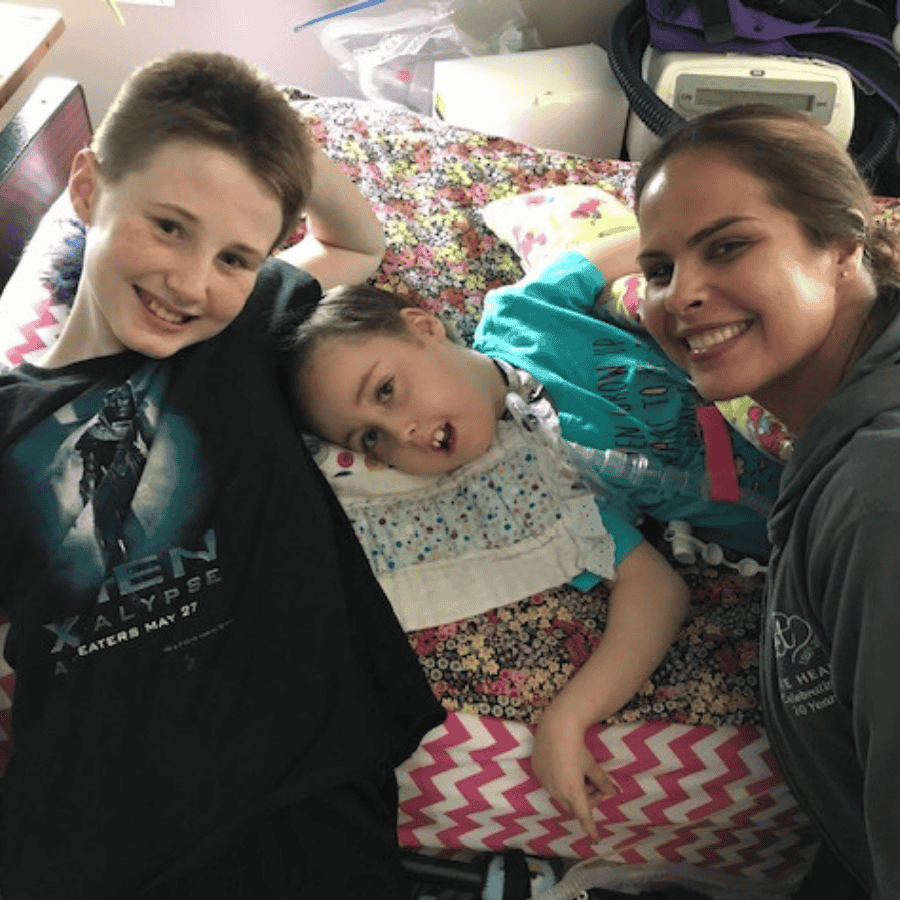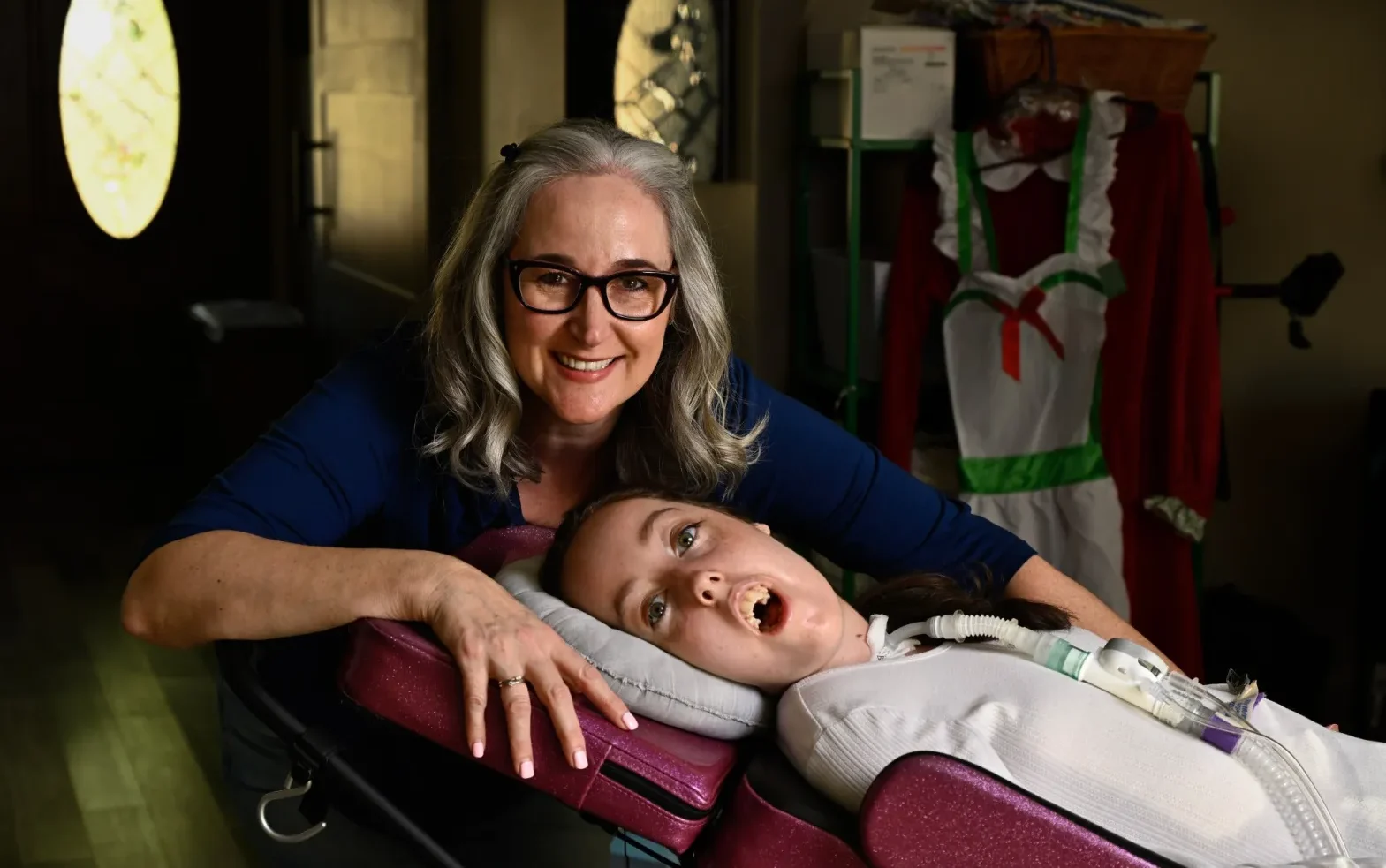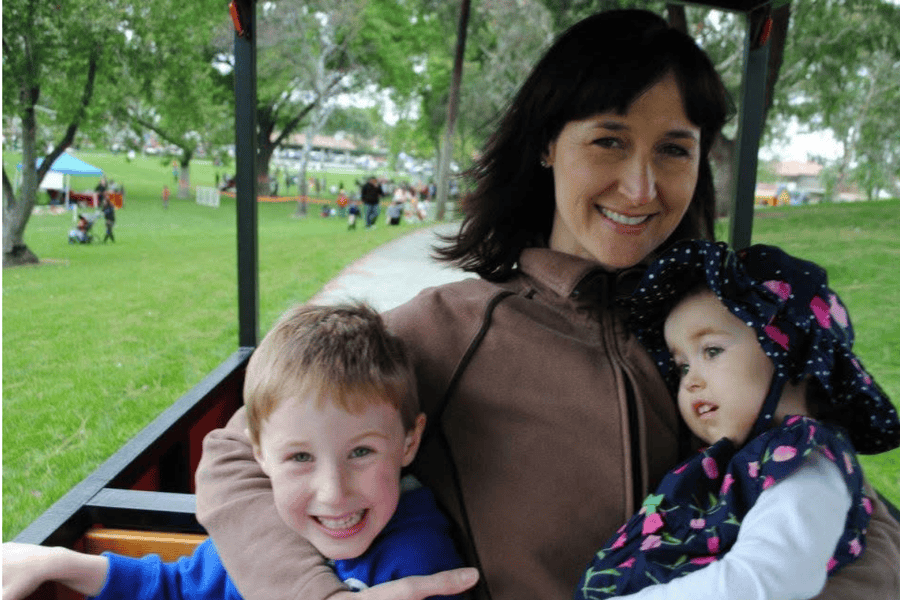

I remember Kennedy’s first hospitalization at our local children’s hospital. She essentially had a bad cold, but because she could not cough effectively or clear her own lungs, she quickly developed pneumonia. She was admitted to the Pediatric Intensive Care Unit where we stayed for weeks on end doing round-the-clock respiratory treatments—bronchodilators (nebulized meds that dilate the little pathways for air in the lungs), mucolytics (nebulized medications that thin the mucous in the lungs) chest percussion n(to loosen the mucous in her lungs), the cough assist machine (a machine that coughs FOR her), and regular suctioning. Rinse and repeat every four hours, or as needed (sometimes every two hours). She was not tolerating her feeds through her g-tube and her fragility came into clear view really quickly.
After 2 ½ weeks in the hospital, she was stable enough to be discharged, but the pulmonary team would not allow us to go home until she had nursing care at home at least 40 hours a week. Part of me understood the concern because keeping up with the level of respiratory intervention she was still requiring was exhausting for one person, but another part of me was deeply resentful. We wanted to go home. I had a 4-year-old at home who needed me and I had been at the hospital 24 hours a day for 2 ½ weeks already. Further, Kennedy did not yet have services through the state that would provide nursing care, which meant the only way for us to get that kind of help would be to pay out of pocket. At that time, that meant paying a nursing agency upwards of $30 an hour for LVN (licensed vocational nurse) level care.
The pulmonary team wanted proof that we had set up 40 hours a week of care for a minimum of 3 weeks or they would keep Kennedy in the hospital until they believed we could manage her care without that help. We did not have the money to pay for this. In a beautiful gesture of support, my Dad and stepmom stepped up to foot the bill so that we could go home.
[For anyone with a child stuck in the hospital because you cannot go home without nursing, I see you. I know that frustration, that feeling of powerlessness and entrapment. I hold a vision for you to be at home with your child as soon as possible.]
That hospital discharge was our first foray into having someone in our home on a regular basis. Once the nurse got trained and acclimated, it was such a relief to be able to leave Kennedy in someone else’s care to go to the bathroom or take a nap. But man was it a strange thing to have another person – who is not a member of your family or a guest – in your home the entire day.
They see the good, the bad, and the ugly. Haven’t cleaned your bathrooms in a while? They see it. Fighting with your husband? They see it. Lots of laundry piled up? They see it. Lose your temper with someone on the phone? They hear it. Let a fart slip out? You get the picture.
When Kennedy eventually qualified for the Medicaid waiver, that waiver started paying for nursing and we had the ability to have regular coverage in place (although with nursing shortages, it didn’t always work out that way). I consider us blessed to have as much nursing as we do, but that amount of coverage means that there is someone else in my house for nearly all waking hours 5 days a week.
When we put in place ABA (Applied Behavior Analysis) services for my son, that meant another 15-20 hours a week of behavior support providers in the house on top of the nursing.
Having this level of support was a double-edged sword. I needed that extra adult in the house who could help Jacob learn coping strategies and appropriate ways to interact, and help me understand my son’s dysregulation, sensory overload, and behaviors that didn’t make sense on the surface. But that was yet another adult watching the good, bad, and ugly unfold in our home.
It was not at all unusual to have a nurse and a behavior technician in the home at the same time. It even became a common occurrence for the behavior technician and the ABA supervisor to be present at the same time as the RN case manager was performing a monthly visit with the LVN on shift. Four EXTRA adults in the house!!
I experienced a sense of losing all privacy with this level of support, and yet, it was needed. For me, the only way to manage the dissonance of needing the support and yet resenting the presence of so many extra people in my home, was to focus (as much as possible) on gratitude – on the ways it made me feel supported and gave me room to breathe. Still, even today, I do relish the times when it’s just my little family doing “normal” family stuff – like Sunday’s family movie night.
For me, the cost of having the inner workings of your home exposed has been far outweighed by having support on this journey. Without this support, I don’t know how I would have been able to do anything for myself at all – getting to doctor’s appointments, going back to work part-time (10 hours a week!), working out, getting an occasional pedicure, going on a date with my husband, or hanging out with friends. For that, I am ever so grateful.
If you are navigating having others in your home, it does get easier – if you just let it be what it is, and find gratitude for the freedom it provides.